
The Ultimate Guide to Cleaning Process Indicators:
2026-01-08
What They Are, How They're Used, and How to Choose the Right Ones for Your Healthcare Facility
In healthcare facilities, ensuring the cleanliness of medical instruments is not just important—it's critical for patient safety. While visual inspection might seem sufficient, many cleaning processes involve complex instruments with hollow spaces, joints, and crevices that can't be adequately assessed by sight alone. This is where cleaning process indicators (CPIs) become essential tools for validating that your cleaning procedures are working effectively.
What Are Cleaning Process Indicators?
Cleaning process indicators are synthetic test soils designed to monitor and validate the effectiveness of cleaning processes in healthcare settings.
CPIs specifically evaluate whether the cleaning procedures are applied the way they have been originally designed.
CPIs are artificial test substances with standardized, predictable wash-off characteristics. These indicators change or disappear when exposed to proper cleaning conditions, providing visual confirmation that cleaning parameters such as time, temperature, chemical concentration, and mechanical action are adequate and did not change unnoticed.
How Are Cleaning Process Indicators Used?
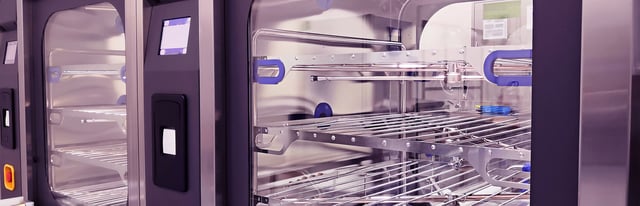
CPIs are primarily used in washer-disinfectors (WDs), endoscope washers, and textile washers. The application process is straightforward: indicators are placed in challenging locations in a holder or inserted to hollow flow process challenge devices (PCDs) that simulate difficult-to-clean lumen instruments.
During the cleaning cycle, the indicators are exposed to the same conditions as the medical instruments. After completion, healthcare professionals visually inspect the indicators to determine if they've been adequately removed or changed according to predetermined criteria. This provides immediate feedback about the cleaning process effectiveness without waiting for lengthy biological test results.
For routine monitoring, facilities typically use CPIs in each cleaning batch, particularly when processing "critical B" instruments—those with surfaces that cannot be visually inspected for cleanliness verification.
Choosing the Right Cleaning Process Indicators
Selecting appropriate CPIs requires understanding that different cleaning processes have varying capabilities. Not all indicators are suitable for every application, and choosing the wrong type can lead to false results—either missing actual cleaning failures or flagging successful processes as inadequate.
- Consider Your Cleaning Process Parameters: Different indicators have varying resistance levels. Some wash off easily with cold water during pre-cleaning, while others require specific combinations of temperature, detergent concentration, and mechanical action. The key is selecting an indicator that will be completely removed by your validated cleaning process but will remain visible if critical parameters are compromised.
- Establish Baseline Performance: The best practice involves testing multiple indicator types simultaneously during validation to identify which indicator is "just washed off" by your established process. This becomes your routine monitoring standard.
Implementation Best Practices
CPI require proper storage away from chemicals (which can affect indicator properties), consistent placement within the cleaning chamber, and clear documentation protocols. Staff should be trained to recognize acceptable wash-off results and understand troubleshooting procedures when indicators suggest process failures.
Regular review of CPI results helps identify trends that might indicate equipment maintenance needs, detergent issues, or process drift before they compromise patient safety.
Conclusion
Cleaning process indicators provide an essential verification step in healthcare instrument reprocessing. By understanding their purpose, proper application, and selection criteria, healthcare facilities can enhance their infection control protocols and ensure consistent, reliable cleaning outcomes. Remember that CPIs are part of a comprehensive quality assurance program—they complement, but don't replace, other monitoring methods and staff training in proper reprocessing techniques.
Partnering with Mesa Labs/GKE gives you access to trusted cleaning process indicators, expert tools, and the support you need to simplify validation and cleaning monitoring.
Topics: Cleaning Process Indicators
Stay up to date.
sign up for our newsletter
Discover our individual solutions for your sector. We are happy to assist you with the design of monitoring with bio and chemo indicators as well as the selection of suitable process challenge devices.